
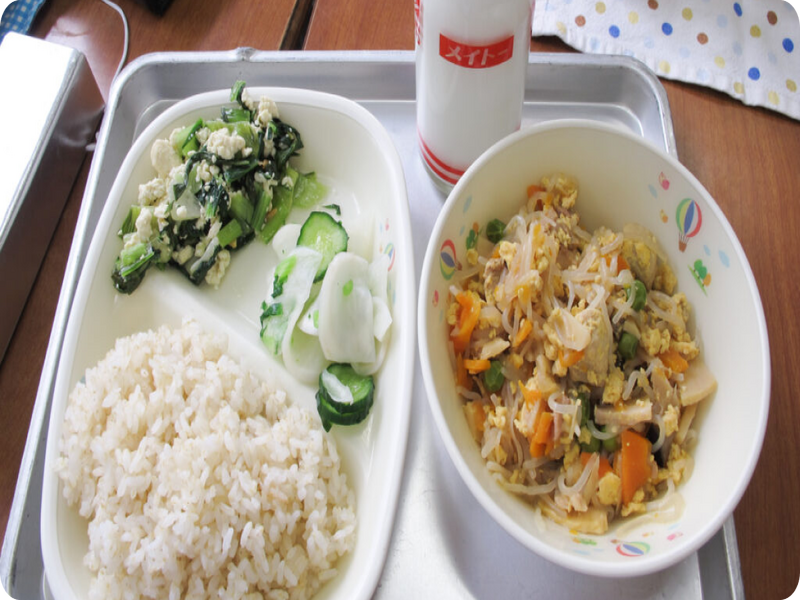
In Japan, school lunches, known as kyūshoku, are designed with a strong focus on health, nutrition, and education rather than speed or convenience. Unlike typical fast food or sugary meals, most Japanese schools prepare meals from scratch every day, often in the school kitchen itself. Fresh ingredients such as rice, seasonal vegetables, fish, lean meats, and local produce form the foundation of these lunches, while processed foods, sugary drinks, and snacks are strictly limited or avoided altogether.
The Japanese school lunch system is not just about feeding children; it is a structured part of their education. Students learn the importance of balanced nutrition, portion control, and the value of eating a variety of foods. Meals are carefully planned to provide all the necessary nutrients for growing children, often following national dietary guidelines.
Teachers and staff also use lunch time to teach proper table manners, hygiene, and the cultural significance of food. Students often participate in serving meals to their classmates and cleaning up afterward, promoting responsibility, teamwork, and respect for the work that goes into preparing food. Seasonal ingredients are emphasized, helping children understand and appreciate local and natural foods while encouraging healthy eating habits that last a lifetime.
Overall, Japanese school lunches are a unique blend of nutrition, education, and cultural values, creating a holistic approach that nourishes the body, mind, and understanding of food.