Supreme Court Rules Land Mutation Alone Does Not Confer Ownership
The Federal Constitutional Court has ruled that a land mutation is only evidence of a transaction and cannot by itself establish ownership, dismissing a petition built on an allegedly forged mutation in Toba Tek Singh.
Get this story and every big update first on WhatsAppFollow the around.pk English News channel — free, no spam Follow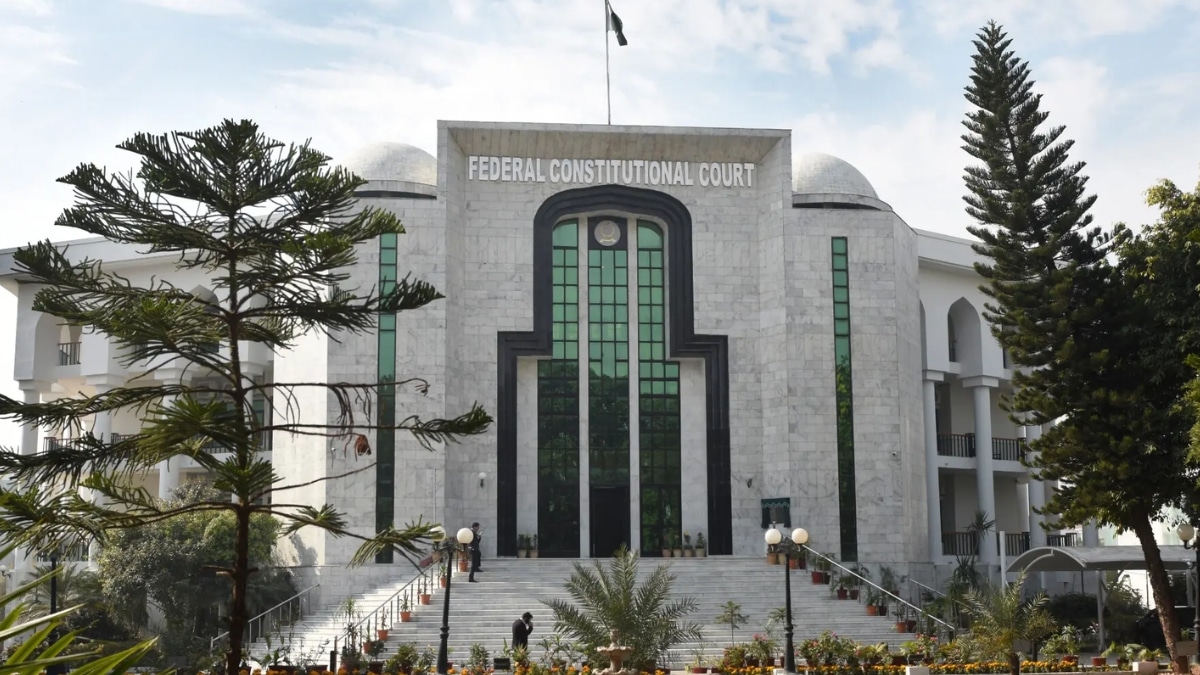
The Federal Constitutional Court of Pakistan has ruled that a land mutation on its own does not confer ownership, holding that such a record merely serves as evidence of an underlying transaction rather than proof of title. The decision carries significant implications for property disputes across the country, where revenue records are frequently treated as definitive proof of ownership.
A two-member bench comprising Justice Syed Hasan Azhar Rizvi and Justice Muhammad Karim Khan Agha dismissed a petition filed by Maqbool Ahmad and others, upholding a Lahore High Court judgment in favour of a woman whose inherited land in Toba Tek Singh was allegedly transferred through a fraudulent oral sale. The court held that any party claiming an oral sale bears the legal burden of proving that the sale consideration was actually paid.
According to the judgment, the woman had neither sold the land nor received any payment. The concerned Naib Tehsildar testified that his signatures on the mutation were forged and that the parties had never appeared before him. The petitioners, described as tenants of land owned by the deceased Mureed Abbas, allegedly colluded with revenue officials to have Mutation No. 1576 sanctioned in their favour on July 28, 2013, after the land had passed by inheritance to his daughters.
The court noted several irregularities: no sale consideration was paid, the mutation was never entered in the daily diary, and the prescribed government fee was not deposited. It observed that under the Contract Act, 1872, and the Transfer of Property Act, 1882, payment or a promise to pay consideration is an essential requirement of a valid sale.
The bench further observed that forcing the woman to launch separate civil proceedings despite clear evidence of forgery would effectively protect an attempt to deprive her of inherited property. Consequently, the court set aside the Board of Revenue's order of February 16, 2022, restored the decisions of the Assistant Commissioner and Additional Commissioner in the woman's favour, and declined leave to appeal.
The ruling reinforces that revenue mutations are administrative records and cannot substitute for lawful proof of a sale, offering clearer guidance to courts and revenue authorities handling inheritance and property-fraud disputes.
The story so far Supreme Court
- Supreme Court Ruling Upheld: OGRA Cannot Prosecute Gas Theft Cases
- Supreme Court Clarifies Islamic Inheritance Shares, Upholds Cousin's Right to Residuary Estate
- Supreme Court Gives CDA Six Months to Settle Land Compensation and Allottee Dues
- Supreme Court Sets Eight Grounds for Cancelling Bail in Landmark Judgment