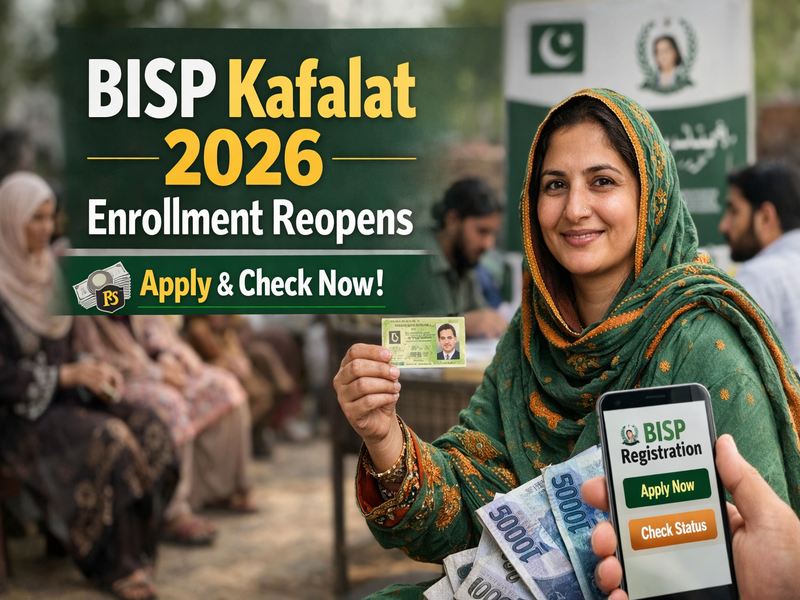
The Government of Pakistan has reopened enrollment for the Benazir Income Support Programme Kafalat 2026, allowing thousands of low-income families another chance to register and receive financial assistance. This step is aimed at ensuring that all eligible households can benefit from the quarterly stipend of Rs. 13,500, which helps families cope with rising living costs across the country.
The decision to restart enrollment was taken after authorities identified gaps in previous registration phases. Many families were left out earlier due to missing or outdated National Socio-Economic Registry data, biometric verification issues at NADRA, expired or incorrect CNIC information, and failure to update household details on time. Through this fresh enrollment phase, the government intends to include more deserving families, resolve pending cases of previously ineligible applicants, and give widows, senior citizens, and persons with disabilities another opportunity to apply. Coverage is also being expanded to newly identified poor districts.
Eligibility for BISP Kafalat 2026 is based on specific criteria. Households with a monthly income below Rs. 40,000 can apply if the family is headed by a woman holding a valid CNIC. Families with government employees or pension holders, owners of large agricultural land or commercial property, or those already receiving multiple government benefits are generally not eligible. Widows and disabled women are being given priority in this enrollment phase.
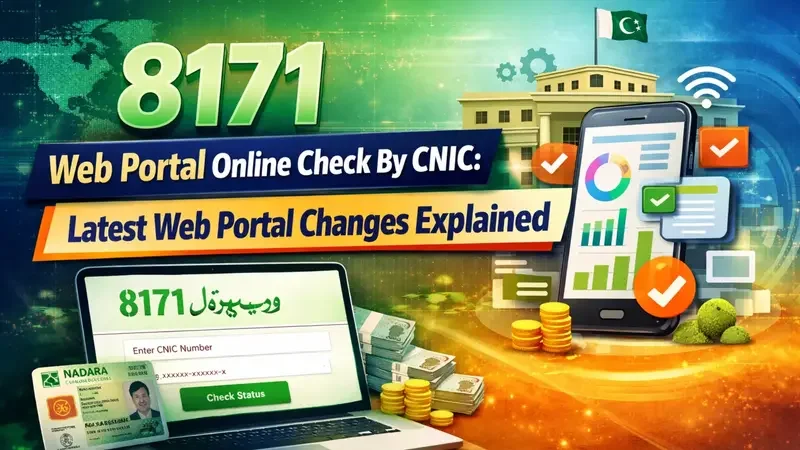
To register, applicants must visit their nearest BISP Tehsil Office with the required documents. Families who have not completed the NSER verification survey earlier will need to do so by providing accurate information about household income, dependents, and residence. Biometric verification is carried out through NADRA-linked desks, after which applicants must wait for a confirmation message from 8171 regarding their eligibility status.
Applicants are advised to carry essential documents to avoid delays, including the original CNIC of the female head of household, children’s B-Form issued by NADRA, proof of residence such as a utility bill or rent agreement, and supporting documents like a death certificate for widows or a disability certificate if applicable.
Enrollment is being carried out in phases across districts to manage crowds and ensure smooth processing. Urban areas with a higher number of pending applications are being prioritized first, followed by rural regions. Families are encouraged to follow official announcements for their district before visiting tehsil offices.
Common issues during enrollment include biometric mismatches, “no record found” messages on 8171, expired CNICs, and confusion over eligibility due to other assistance programs. These problems can usually be resolved by updating fingerprints at NADRA offices, completing or correcting the NSER survey, renewing CNICs, or consulting BISP staff for clarification.
After enrollment, applicant data is verified against NADRA and NSER records. Eligible families receive a confirmation SMS from 8171, after which payments are issued on a quarterly basis through designated banks or BISP payment centers. Beneficiaries are also provided with a BISP card to make withdrawals easier.
Looking ahead, the government plans to introduce a digital wallet system that will allow beneficiaries to receive stipends directly into mobile accounts. More banks are also being added to expand payment options, particularly for families living in remote areas. To ensure transparency, BISP is using digital verification systems, automated SMS alerts, real-time data cross-checks, and monitoring teams at tehsil offices so that funds reach only deserving households.
Many families were excluded in earlier phases due to outdated survey data, expired CNICs, technical errors, or missed deadlines. By reopening enrollment for BISP Kafalat 2026, the government is providing these households with a second chance to register and access financial support.
Overall, the renewed enrollment drive is a major relief for low-income families across Pakistan. With clearer eligibility rules, a structured registration process, and stronger verification measures, more households can now secure the quarterly Rs. 13,500 stipend and gain some financial stability during challenging economic conditions.