10 Aug 2026
around.pk

Pakistan & World News

Advertisement
Business

Offload all loss-making SOEs within 12 month on war footing, new PBC Chairman urges

Business Recorder
10 Aug 2026 · 7:08 PM · 2 views
WA f X
Offload all loss-making SOEs within 12 month on war footing, new PBC Chairman urges

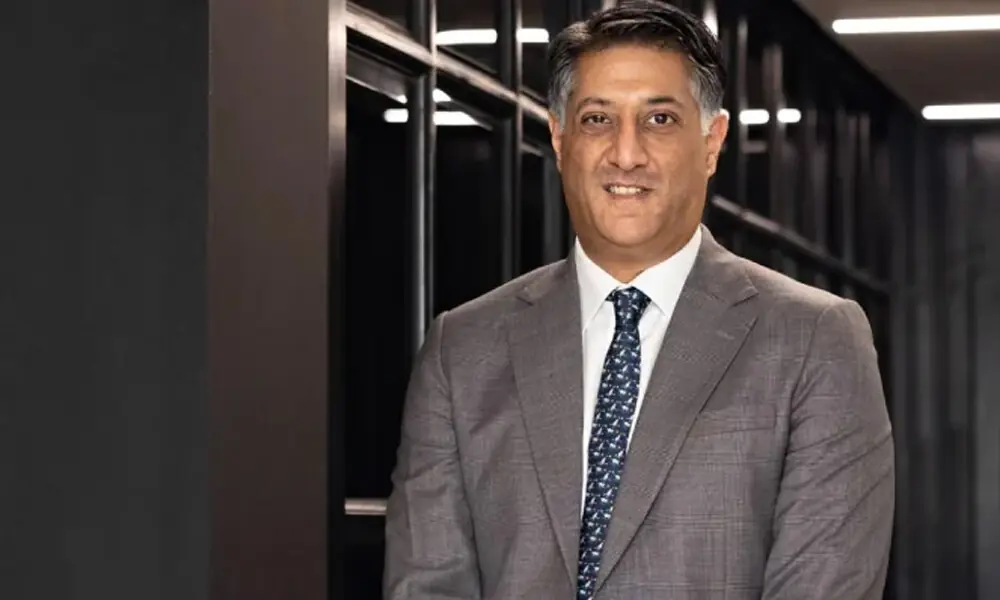
PBC Chairman Ziad Bashir urges rapid privatization of all loss-making state-owned entities within 12 months, alongside tax reform and export growth, to stabilize Pakistan's economy.

The newly appointed chairman of Pakistan Business Council (PBC), Ziad Bashir, has urged the government to accelerate the ongoing privatisation process, saying that all loss-making state-owned entities (SOEs) should be “offloaded within 12 months”.

Advertisement

Talking exclusively to Business Recorder, Bashir, who assumed charge at PBC last week, termed the pace of the government privatisation initiative “too slow”.

“I’d say get rid of the SOEs as fast as possible… Everything that should be offloaded has to be offloaded within 12 months,” said the PBC chairman when asked about the top reform the government should take in correcting the country’s economic course.

“It has to be done on a war footing at high speed,” he stressed.

The entrepreneur noted that SOEs cost the national exchequer billions of dollars in yearly losses. “And every delay costs you billions more,” he said, arguing that selling a loss-making entity even at a nominal amount could make economic sense.

Bashir, who also serves as the Chief Executive Officer of Arwen Tech (Private) Limited, termed last year’s privatisation of Pakistan International Airlines (PIA) “amazing”

“The group [consortium] that has bought PIA is very capable. I think if the government can just get more good business groups like this to take over the SOEs, they’ll be able to turn them around,” Bashir said.

Last year in December, the Arif Habib-led consortium acquired a 75% stake in the loss-making national carrier for Rs135 billion.

In his interview, the PBC chairman identified export growth as his top priority, linking Pakistan’s repeated boom-and-bust cycles to a structural imbalance.

“Whenever Pakistan’s economy grows over a certain speed, you go bust because the imports grow faster than the exports.”

The remarks come as Pakistan’s export performance in the last fiscal year 2025-26 (FY26) had remained lacklustre, characterised by an overall decline in goods exports despite growth in specific sectors like IT and certain textile sub-sectors.

The country’s total exports for FY26 amounted to approximately $30.13 billion, representing a year-on-year decline of nearly 6%, contributing to a widening trade deficit and a shift to a current account deficit.

Talking to Business Recorder, Bashir said Pakistan must focus on increasing exports, reforming the tax system and reducing losses from SOEs simultaneously, rather than concentrating only on the revenue and export sides of the economy.

Terming the tax system as “completely broken” and “anti-growth”, the PBC chairman called for the broadening of the tax base and the documentation of large segments of the economy, which remain undocumented.

“The way you can do that is to have [tax] rates, which are acceptable,” said Bashir, adding that the government also needs to build taxpayer confidence by demonstrating how revenues collected were being spent.

Highlighting the imbalance in the tax structure, Bashir, who served as the Chairman of the Pakistan Retail Council from 2014 to 2021, said the retail sector accounted for around 18% of GDP but contributed only around 1% of taxation.

He said bringing more retailers into the tax net was vital. “Even if the government can bring 500,000 retailers into the tax net, it will be a great success,” said Bashir.

Apart from loss-making SOEs and a low tax base, high energy costs were also hampering economic growth, noted Bashir.

‘Electricy consumers will leave the grid’

He said expensive electricity was encouraging productive consumers to leave the national grid and shift towards renewable energy. “And now with the prices of batteries falling, the consumers will just completely leave the grid,” he warned.

The PBC chairman said that the government needs to engage with the International Monetary Fund (IMF) in this regard. “They have to talk to the IMF and bring them on board,” he said.

Pakistan remains under a 37-month IMF Extended Fund Facility (EFF) programme for $7 billion, which is structured around four key pillars: reinforcing monetary and fiscal policy credibility, strengthening public finances, maintaining price stability, and implementing structural reforms.

Bashir pointed out that Pakistan’s export performance remains constrained by high energy costs and the exchange rate.

“If your currency has a value of 110, which means it’s overvalued, the imports are going to come in automatically. So we need to keep it slightly undervalued, but it cannot be over 100, because that’s just disastrous,” he said.

Apart from this, Pakistan needs to change its export mix, said Bashir, as he urged exporters to venture into more technical and value-added sectors. “We can’t be exporting the same things we were exporting 30 years ago. We need to add value to everything that we export,” he said.

Calling for implementation, the PBC chairman urged relevant authorities to curb smuggling, which remains a major threat to industrial competitiveness.

“Enforcement has to be done against smuggling in a big way,” he said, arguing that local manufacturers face difficulty accessing foreign markets while smuggled imported goods are widely available locally “without paying any duties or taxes”.

In his concluding remarks, Bashir called for regular monitoring of government performance.

“If you review it after six months, it’s already too late; the damage is done,” he said, stressing the need for frequent reviews of the government measures so that corrective action could be taken before “it’s too late”.

Also available in Urdu اردو ←
Advertisement