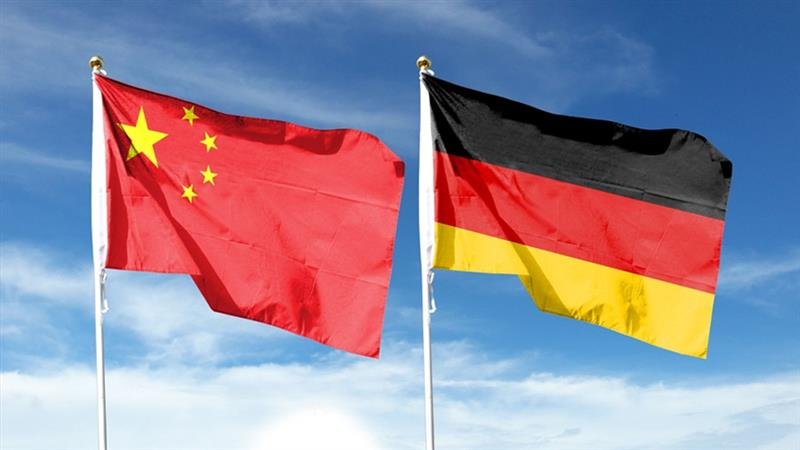
Investments by German companies in China reached a four-year high in 2025, highlighting how trade policies under U.S. President Donald Trump have encouraged firms and governments to strengthen business ties elsewhere. Data from the IW German Economic Institute showed that German investments in China exceeded 7 billion euros ($8 billion) between January and November, up 55.5 percent from 4.5 billion euros in 2024 and 2023.
The increase reflects the impact of aggressive U.S. trade policies, including tariffs on EU imports, which prompted German firms to shift focus to China as an alternative market. Germany has aimed to balance a firm stance on trade and security with maintaining its fundamental relationship with China, its largest trading partner.
Officials noted that German companies are expanding activities in China at an accelerated pace, strengthening local supply chains and ensuring business continuity amid concerns over geopolitical tensions. The shift toward China also allows firms to reduce exposure to potential tariffs and export restrictions.
Major German companies, including BASF, Volkswagen, Infineon, and Mercedes-Benz, remain heavily reliant on the Chinese market for cars, chemicals, and other products. Volkswagen emphasized that investments in China and the U.S. are strategically independent, with technologies and products developed in China being applied across regions such as Southeast Asia, the Middle East, South America, and Africa, reinforcing its global competitiveness.
German Economy Minister Katherina Reiche highlighted the importance of exploring new alliances as traditional trade relations become more fragile. Companies like ebm-papst invested heavily in China, with 30 million euros dedicated to expanding operations, producing closer to customer demand, and providing stability amid tariffs and geopolitical tensions, while also planning to grow business in the U.S.
Overall, rising German investment in China demonstrates the growing importance of diversifying supply chains and markets to manage geopolitical risks while sustaining global business growth.