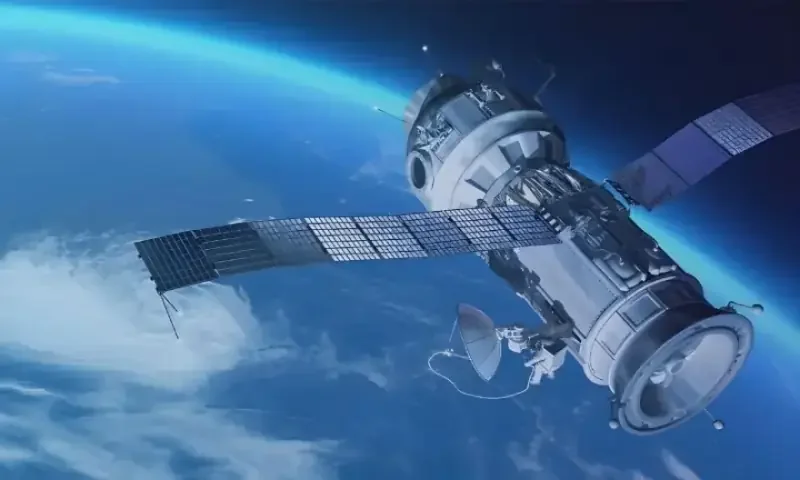

China successfully conducted its first emergency space launch on Tuesday, sending the unmanned Shenzhou-22 spacecraft into orbit without any issues. The mission aimed to address safety concerns at China’s Tiangong crewed space station after earlier damage to a vessel in orbit this month.
The Shenzhou-22 lifted off at 12:11 p.m. local time (0411 GMT) from the Jiuquan Satellite Launch Centre in northwest China aboard a Long March-2F rocket, according to the China Manned Space Agency (CMSA). CMSA confirmed that the spacecraft separated from the rocket as planned and entered its designated orbit, describing the launch as a “complete success.”
Footage shared by Chinese state broadcaster CCTV captured the rocket ascending into space, with Earth visible in the background as the spacecraft reached orbit. After its launch, Shenzhou-22 traveled to the Tiangong space station, China’s permanently inhabited orbital facility, and successfully docked at 3:50 p.m. local time (0750 GMT).
This mission highlights China’s growing capabilities in human spaceflight and its ability to respond quickly to emergencies in orbit, ensuring the safety and maintenance of its space station operations.