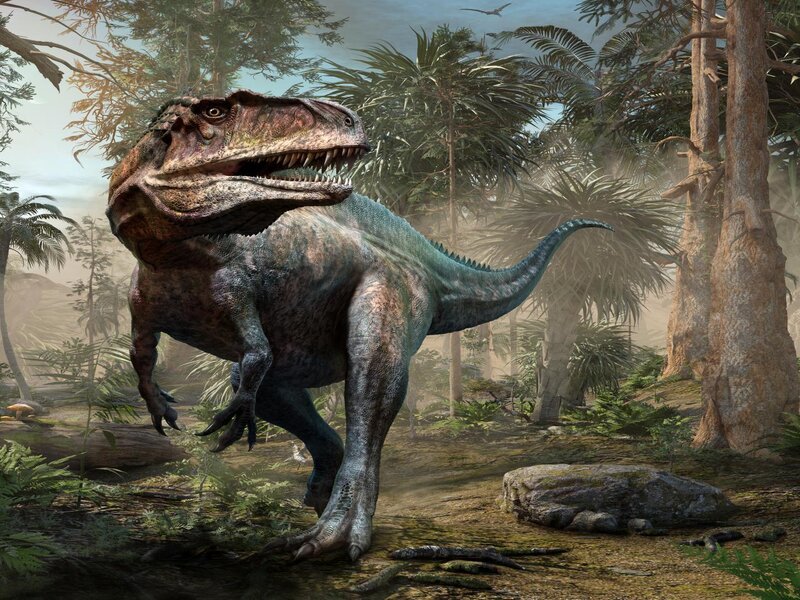
Scientists have discovered remarkably well-preserved dinosaur footprints in Southwest China, dating back approximately 200 million years to the late Triassic period. These fossilized tracks offer a rare glimpse into the region’s prehistoric ecosystem, revealing evidence of dinosaur activity long before the Jurassic period, which is more commonly associated with large dinosaur fossils.
The footprints were found in sedimentary rock formations, indicating that the area was once a wet, muddy environment, likely a riverbank or lakeshore, where dinosaurs roamed in search of food and water. Researchers report that the size, depth, and stride of the tracks suggest they were made by medium to large-sized herbivorous and possibly carnivorous dinosaurs, providing valuable insights into the types of species that inhabited the region.
Experts believe that studying these footprints can reveal information about dinosaur behavior, such as their walking speed, gait, and even potential social interactions if multiple tracks indicate group movement. This discovery adds to China’s growing record of dinosaur trace fossils, which have become critical for understanding the evolution, diversity, and migration patterns of early dinosaurs across Asia.
The findings also have broader scientific significance, as they help paleontologists reconstruct the paleoclimate and landscape of Southwest China during the Triassic period. By analyzing the rock layers and fossil impressions, researchers can infer environmental conditions, such as rainfall patterns, vegetation, and the presence of rivers or lakes, shedding light on how early dinosaurs adapted to their habitats.
Overall, these 200-million-year-old footprints not only enrich our understanding of dinosaur evolution but also highlight Southwest China as a key region for uncovering the planet’s prehistoric past.