The government has officially set a strict annual fee increase limit for private schools in 2026, bringing long-awaited relief to parents worried about sudden and excessive fee hikes. Under the new policy, private schools are no longer free to raise fees arbitrarily, as clear caps have been introduced along with strict enforcement measures.
The Private Educational Institutions Regulatory Authority has issued binding instructions to all registered private schools, making annual fee increases regulated and legally enforceable. This decision follows serious concerns raised in parliament and education committees over the rising cost of private education, which has placed a heavy burden on middle- and low-income families.
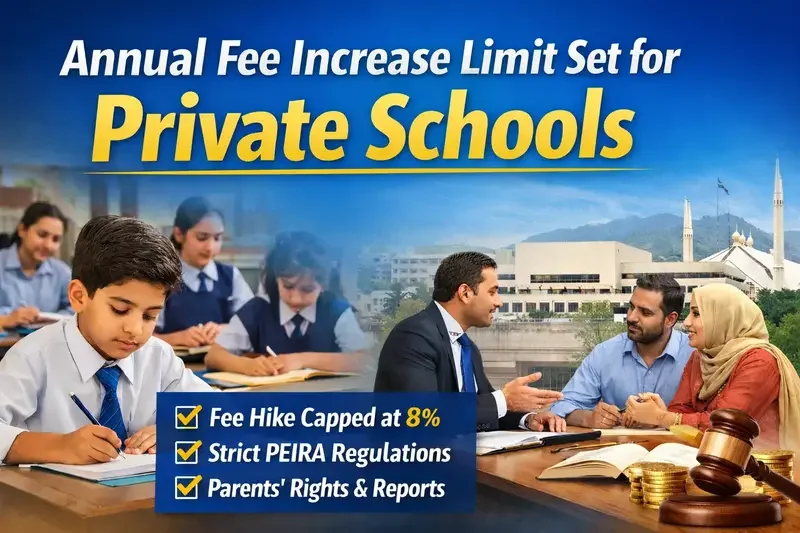
According to the latest directive, private schools are allowed a standard annual fee increase of up to five percent. In special cases, schools may seek an additional increase of up to three percent, but the total annual increase cannot exceed eight percent under any circumstances. Any fee hike beyond this limit is considered illegal, regardless of the reason provided by the school.
Schools that wish to increase fees above the standard five percent must meet strict conditions. They are required to submit audited financial statements, provide clear evidence of increased operational costs, and obtain formal approval from the regulatory authority. Without meeting these requirements, any additional fee increase is subject to penalties.
To ensure compliance, the regulatory authority has announced a strong enforcement strategy for 2026. This includes surprise inspections, audits of fee structures, prompt action on parent complaints, and penalties for violations. Schools found breaching the approved limits may face fines, suspension of registration, or legal proceedings.
An important part of the new directive is the requirement for social responsibility. All private schools must now provide free education to at least ten percent of their students, with priority given to children of martyrs and students from financially disadvantaged backgrounds. This measure is intended to promote fair access to education while balancing the growth of private institutions.
Parents have also been given clear legal rights under the new framework. If a school increases fees beyond the allowed limit, parents can file a complaint with the regulatory authority by submitting fee slips or official notices as evidence. Authorities have assured that verified complaints will be investigated and acted upon without delay.
The government has also announced a crackdown on unregistered private schools. While a large number of schools are officially registered, many continue to operate without proper approval. Such institutions will be issued notices and required to register immediately or face closure and legal action. This move aims to improve accountability and education standards.
This decision was taken after repeated warnings from lawmakers and oversight bodies, who highlighted how unchecked fee hikes were pushing quality education out of reach for many families. By introducing predictable limits and stronger oversight, the government aims to restore trust between parents and private schools.
For parents and students, the new policy brings greater financial predictability, protection from sudden fee shocks, and improved transparency. In the long term, it is expected to encourage ethical school management and better regulation of the private education sector.
Private schools are now expected to review their fee policies, maintain accurate financial records, ensure proper registration, and comply with free education requirements. Authorities have made it clear that non-compliance in 2026 will not be tolerated, marking a significant shift toward fair and regulated private education.