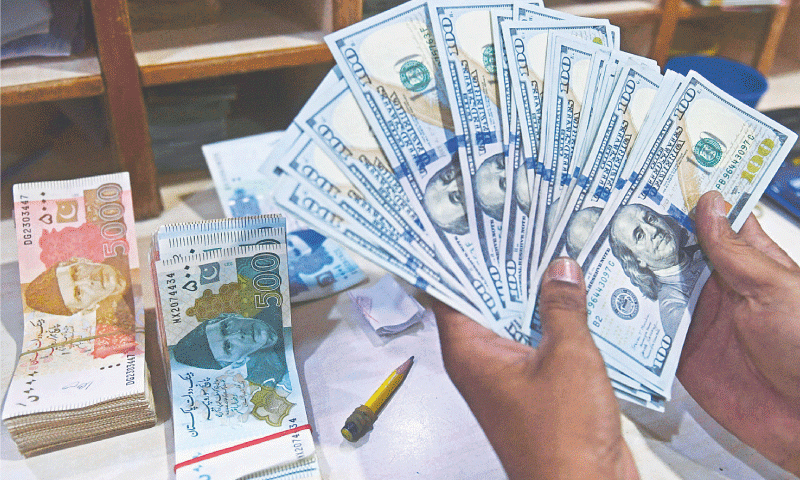

Pakistan’s remittances showed a solid improvement in November 2025, rising by 9 percent to reach $3.19 billion, according to the latest data from the State Bank of Pakistan (SBP). This marks an increase from $2.92 billion in November 2024 and follows a 7 percent drop recorded in October 2025, when inflows stood at $3.4 billion.
From July to November 2025—the first five months of the current fiscal year—Pakistan received $16.145 billion in total remittances, reflecting a 9 percent year-on-year increase compared to $14.766 billion during the same period of the previous fiscal year. The SBP noted that this steady rise in foreign earnings continues to play a crucial role in easing pressure on the balance of payments, providing much-needed stability to the external account.
However, despite stronger remittance inflows, concerns about the country’s overall financial health have intensified. In a recent report, the SBP highlighted a record surge in federal government debt, raising red flags about long-term economic sustainability.
According to the report, Pakistan’s total government debt grew by 12.7 percent year-on-year, climbing to Rs 73.69 trillion in March 2025 from Rs 65.38 trillion in March 2024. On a month-to-month basis, the debt burden increased by 0.9 percent, adding Rs 652 billion in just one month.
Domestic debt saw a particularly sharp rise, jumping 18.6 percent from Rs 43.43 trillion in March 2024 to Rs 51.52 trillion in March 2025. This significant increase in borrowing has deepened concerns about fiscal management, interest payment pressure, and the government’s ability to stabilize its financial position.
Overall, while remittances provide a vital cushion for Pakistan’s external sector, the escalating debt levels underscore the urgent need for structural economic reforms, improved revenue generation, and better fiscal discipline to ensure long-term stability.