Pakistan is reported to be in the final stages of negotiating a major defense export agreement valued at approximately $1.5 billion with Sudan, a Muslim-majority country in North Africa. According to multiple sources familiar with the matter, the deal is expected to include a range of military hardware such as aircraft, drones, and air-defense systems, marking one of Pakistan’s largest recent defense export packages.
If finalized, the agreement would significantly strengthen Sudan’s armed forces, which have been engaged in a prolonged and destructive conflict with the paramilitary Rapid Support Forces. The fighting has pushed the country into a severe humanitarian crisis, displacing millions of people and drawing increasing international scrutiny. Sudan’s strategic importance, due to its Red Sea coastline and vast gold reserves, has further heightened global attention on the conflict and the balance of military power within the country.
Sources said the proposed package includes around 10 Karakoram-8 light attack aircraft, which are designed for close air support, counterinsurgency operations, and pilot training. In addition, the deal reportedly involves more than 200 drones intended for both intelligence, surveillance, and reconnaissance missions, as well as loitering munitions capable of precision strikes. Advanced air-defense systems are also said to be part of the discussions, potentially enhancing Sudan’s ability to protect key installations and counter aerial threats.
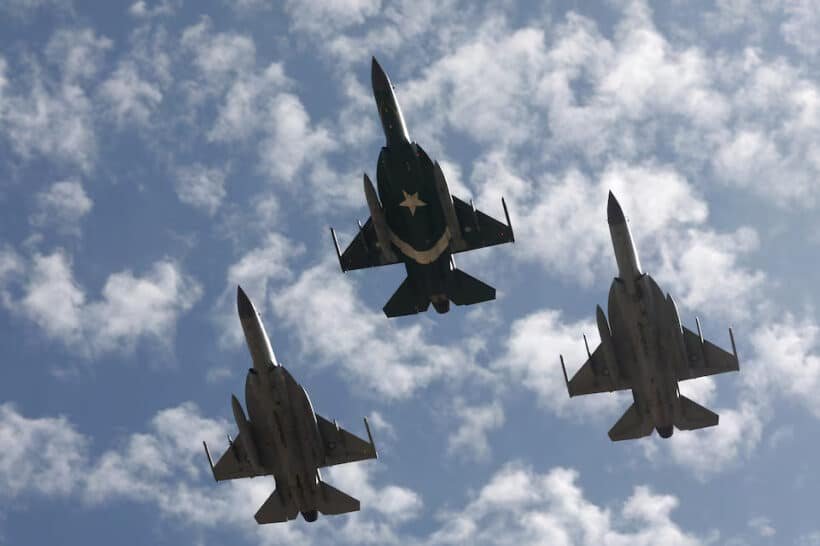
Retired Pakistani Air Marshal Aamir Masood indicated that the broader defense bundle may also include Super Mushshak training aircraft, which are widely used for basic and intermediate pilot training. He added that the package could potentially feature a limited number of JF-17 fighter jets, although no details were provided regarding quantities, delivery schedules, or specific variants. Such an inclusion would represent a notable escalation in Sudan’s air combat capabilities.
Neither Pakistan’s military nor its defense ministry has issued an official statement on the reported negotiations, and requests for comment have not received immediate responses. Similarly, a spokesperson for the Sudanese army was not immediately available to confirm or deny the reports.
Analysts note that the addition of drones, light attack aircraft, and air-defense systems could help Sudan’s military regain an advantage in the air, particularly as the RSF has increasingly relied on drones to expand its battlefield reach. Sudan’s army has previously accused the Rapid Support Forces of receiving external backing from the United Arab Emirates, allegations that the UAE has consistently denied. If concluded, the deal would not only reshape the military balance within Sudan but also underscore Pakistan’s growing role as a supplier in the global defense export market.