
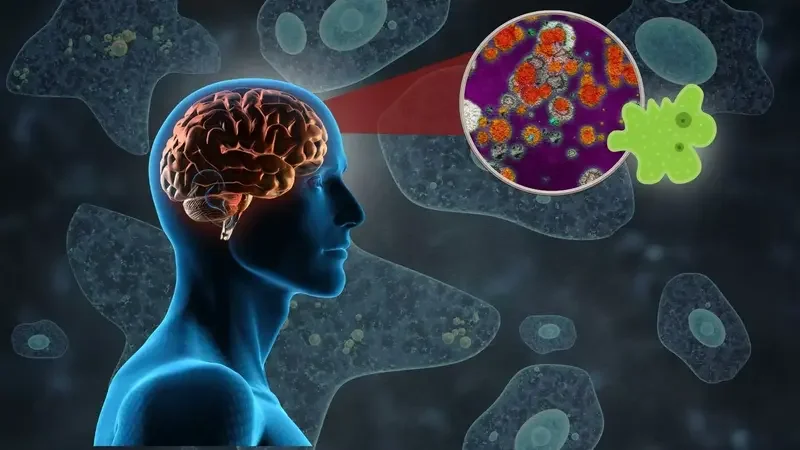
Scientists are raising alarms about free-living amoebae, tiny organisms naturally present in soil and water, which in rare cases can trigger deadly infections in humans. A primary concern is Naegleria fowleri, known as the “brain-eating amoeba,” capable of causing a rapid and usually fatal brain infection when contaminated warm freshwater enters the nose. Although infections remain uncommon, researchers warn that exposure risks are increasing.
These amoebae are appearing more frequently in modern water systems, including recreational lakes, swimming pools, and even municipal drinking-water networks. Their resilience makes them particularly hazardous: they can survive elevated temperatures, resist chlorine treatments, and persist inside plumbing and water infrastructure long assumed to be safe.
Adding to the threat, free-living amoebae can function as “Trojan horses,” sheltering bacteria and viruses within their cells. This protects other pathogens from standard water treatments and may contribute to the spread of antibiotic-resistant microbes.
Climate change, which expands warm-water environments, coupled with aging water infrastructure in many regions, heightens the risk of human exposure. Scientists are calling for a comprehensive One Health strategy that integrates environmental monitoring, public health surveillance, and improved water treatment practices. Coordinated action is seen as essential to prevent future outbreaks and protect communities before infections occur.






































Comments (1)