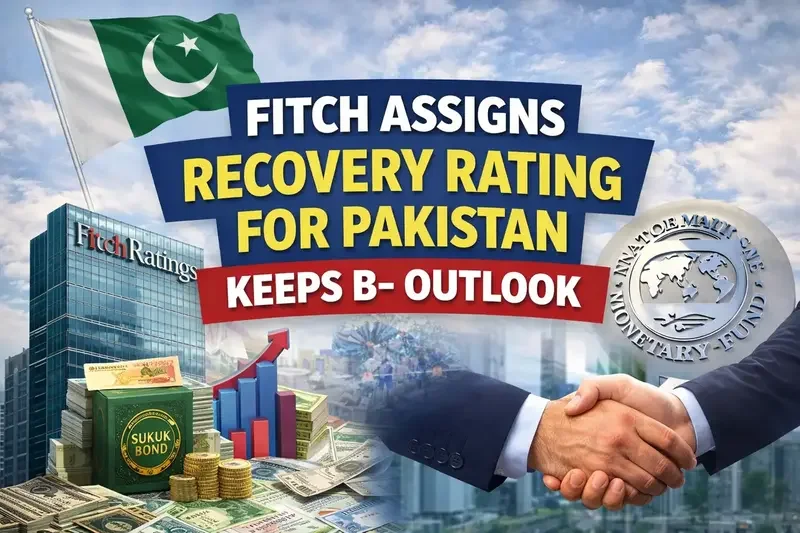
Fitch Ratings has maintained Pakistan’s long-term foreign-currency rating at B- with a stable outlook while introducing a Recovery Rating of RR4, reflecting average recovery prospects for investors in case of a sovereign default. This decision follows the removal of Pakistan’s ratings from Under Criteria Observation and the adoption of Fitch’s updated Sovereign Rating Criteria in September 2025, which incorporate recovery assumptions into debt assessments. A Recovery Rating of RR4 suggests that bondholders could expect moderate recovery, though not full repayment, if a restructuring were necessary.
The rating covers Pakistan’s senior unsecured long-term debt and obligations issued under the Pakistan Global Sukuk Programme Company Limited, aligning them with the country’s long-term foreign-currency Issuer Default Rating. Fitch kept the outlook stable due to gradual improvements in macroeconomic management, fiscal adjustment, policy discipline under IMF oversight, and ongoing external financing support. Pakistan’s credit profile remains closely tied to IMF engagement, and delays in programme reviews or deviations from agreed reforms could negatively affect external liquidity, foreign reserves, and investor confidence.
Environmental, social, and governance factors were also highlighted, with Pakistan receiving an ESG Relevance Score of 5 for political stability, rule of law, institutional quality, and control of corruption, reflecting governance challenges and a low World Bank Governance Indicators ranking at the 22nd percentile globally. Negative rating triggers include rising government debt, inability to control debt servicing costs, weakening external liquidity, delays in IMF programme implementation, and weak fiscal discipline. Positive rating triggers that could improve Pakistan’s rating include sustained debt reduction, stronger tax revenue, successful fiscal consolidation, growth in foreign-currency reserves, and improved access to external financing.
For investors, the Fitch decision signals no immediate downgrade risk, manageable default risk, and clearly priced recovery prospects, providing clarity for bond markets, sukuk investors, and lenders. The rating directly influences external borrowing costs, investor sentiment, access to global capital markets, and currency stability, helping Pakistan avoid sudden financing shocks while continuing reforms. Sustained fiscal discipline, successful IMF-backed reforms, and improving economic indicators could gradually enhance Pakistan’s sovereign credit standing in 2026.