Scientists have identified the first strong evidence of a massive underground lava tube beneath the surface of Venus, offering new insight into the planet’s volcanic history and internal structure.
A research team from the University of Trento detected what appears to be a large subsurface cavity near Nux Mons, a prominent volcanic feature on Venus. The findings, published in Nature, mark the first time scientists have identified a likely underground tunnel on Earth’s so-called “evil twin.”
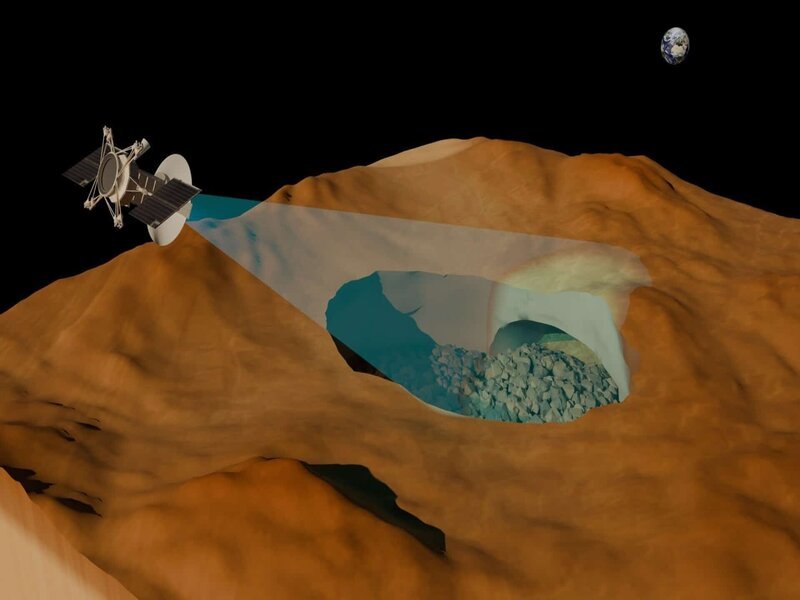
The discovery was made by reanalyzing archival radar data from NASA’s Magellan mission, which mapped nearly the entire Venusian surface between 1990 and 1992. Researchers examined the radar images for subtle signs of surface collapse — a common indicator of lava tubes on Earth and Mars — and identified a large depression consistent with a collapsed volcanic cavity.
The scale of the suspected lava tube is extraordinary. Scientists estimate it could be about one kilometer (0.6 miles) wide, making it significantly larger than most known lava tubes on Earth or even on Mars. The structure is believed to have a roof thickness of roughly 150 meters (about 490 feet) and an internal cavern at least 375 meters high, suggesting immense subterranean void space.
Lava tubes form when low-viscosity lava flows beneath a hardened surface crust. As the molten rock drains away, it leaves behind hollow tunnels. On Venus, such a large tube implies extensive volcanic activity in the planet’s past and possibly a vast network of similar underground structures hidden beneath its thick crust.
Venus is widely regarded as one of the most volcanically active bodies in the solar system. However, its dense carbon dioxide atmosphere, crushing surface pressure, and extreme temperatures — hot enough to melt lead — have made direct observation and exploration exceptionally challenging. The newly identified cavity provides rare indirect confirmation of long-theorized volcanic processes occurring below the surface.
The discovery also strengthens the scientific case for upcoming missions aimed at studying Venus in greater detail. VERITAS, led by NASA, and EnVision from the European Space Agency are scheduled for launch in the early 2030s. Both missions will carry advanced radar systems capable of penetrating the planet’s thick clouds and mapping its surface and subsurface with far greater precision than Magellan.
With improved radar imaging and higher-resolution data, scientists hope to confirm the existence of this colossal lava tube and determine whether Venus harbors an extensive underground volcanic network — potentially reshaping our understanding of how terrestrial planets evolve.