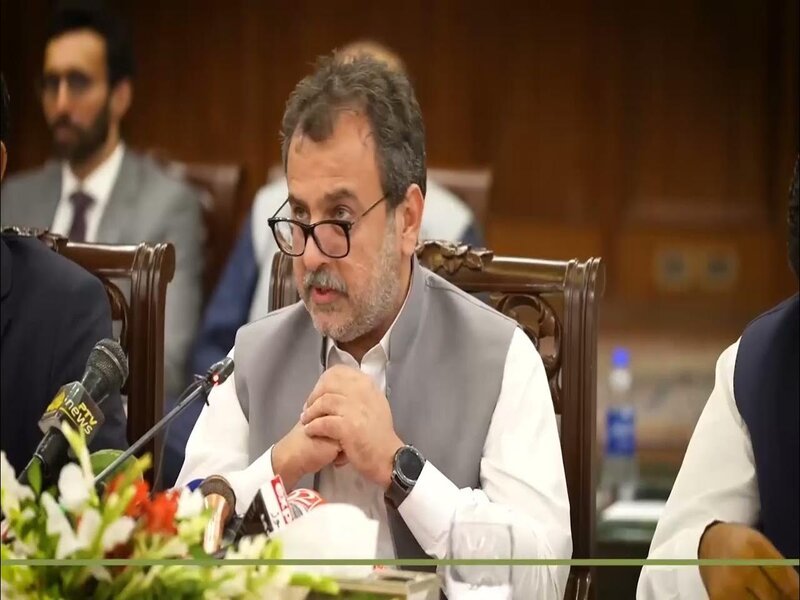
The federal government has halted the transition of consumers from net metering to net billing and decided to file an appeal against the regulator, following mounting political and public pressure over solar policy. Federal Minister for Power Division Awais Leghari, speaking in the National Assembly, framed the controversy in the context of broader power sector reforms, highlighting that the government has reduced circular debt by Rs. 780 billion, renegotiated agreements with independent power producers, and achieved Rs. 3,400 billion in relief.
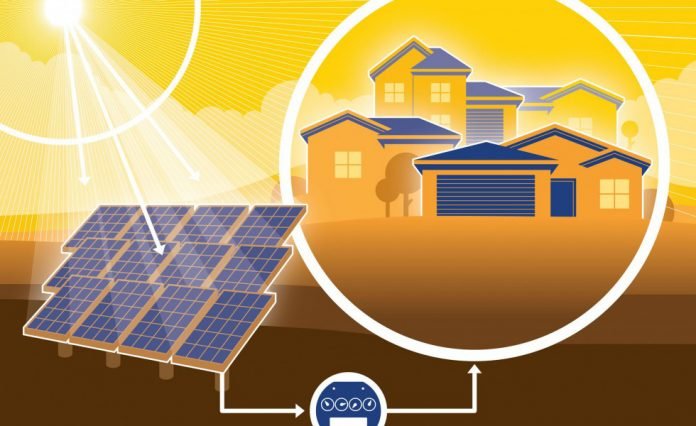
Leghari noted that IPP tariffs have been lowered, with an additional Rs. 100 billion saved from a project linked to the prime minister’s relative, and electricity tariffs for industrial consumers have been reduced to support economic activity. He explained that net metering, introduced in 2017, has undergone multiple regulatory revisions, and the government retains the right to challenge the regulator’s decision.
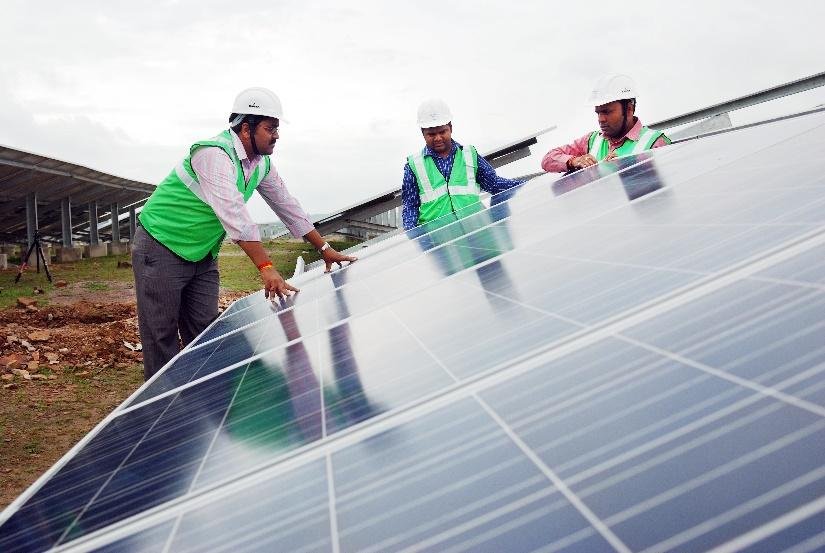
Currently, Pakistan has around 20,000 to 22,000 megawatts of solar capacity, with approximately 6,000 megawatts under net metering and about 7,000 megawatts in the industrial and commercial sector. Nearly 700,000 consumers use net metering, while about 35 million do not. Leghari questioned the fairness of purchasing electricity at Rs. 27 per unit from net-metered consumers when power from other sources costs roughly Rs. 8 per unit.
He also highlighted regional disparities, noting that in Islamabad’s F and G sectors, most solar systems are on net metering, while suburban areas such as Burma Town have fewer. Overall, only 8–10 percent of consumers nationwide are on net metering.
During the question hour, the power division reported that of 12,665 feeders nationwide, 2,223 experience load shedding exceeding 10 hours daily. Quetta Electric Supply Company had the worst situation with 604 out of 814 feeders affected, followed by Peshawar Electric Supply Company with 642 out of 1,376 feeders. In contrast, Lahore, Islamabad, Gujranwala, and Faisalabad Electric Supply Companies reported no feeders with over 10 hours of outages.
Transmission losses exceeded Rs. 600 billion over two years, with Rs. 322 billion in FY24 and Rs. 284 billion in FY25. Peshawar recorded Rs. 96 billion in losses, followed by Quetta (Rs. 51 billion), Lahore (Rs. 46 billion), Sukkur (Rs. 37 billion), and Hyderabad (Rs. 22 billion). Between July and December 2025, electricity consumption reached 8.78 billion units, with a total consumer base of 39.22 million, including 21.55 million protected consumers.
The minister added that net metering capacity reached 7,000 megawatts by December 2025, while off-grid solar capacity stands at 12.62 megawatts. Electricity consumers continue to pay Rs. 310 billion annually to service circular debt. Agreements with multiple IPPs have been revised, providing relief to consumers, while projects totaling 7,967 megawatts of high-cost electricity have been cancelled, and further negotiations with other IPPs are ongoing.