KARACHI: Gold and silver prices in Pakistan declined on Friday, February 13, 2026, tracking losses in the international bullion market, according to the All Pakistan Sarafa Gems and Jewellers Association. The downturn reflects shifting global commodity trends and currency movements that continue to influence domestic precious metal rates.
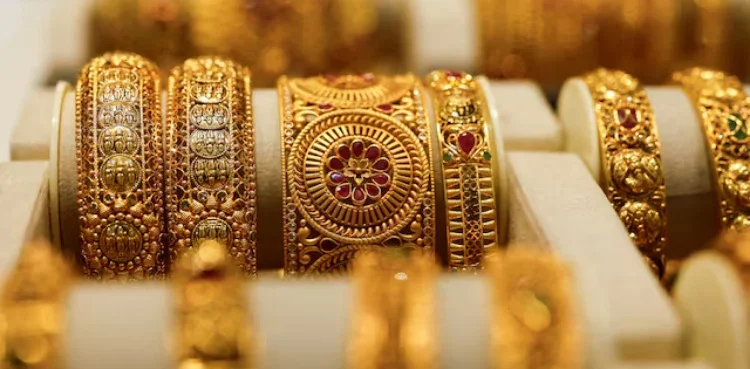
The price of 24-karat gold per tola fell by Rs8,600 to Rs519,962, while the rate for 10 grams of 24-karat gold dropped by Rs7,373 to Rs445,783. The decrease in local gold prices mirrors the weakness in international spot gold, as Pakistan’s bullion market remains closely aligned with global benchmarks and US dollar fluctuations.
Silver prices in Pakistan also moved lower, with 24-karat silver per tola declining by Rs501 to Rs8,324. The drop in silver rates follows the broader precious metals correction, as investors adjust positions in response to international price signals and currency dynamics.
In the global market, gold prices fell by $86 to $4,972 per ounce, reflecting profit-taking and short-term volatility. Analysts noted that the US dollar’s decline to its lowest level since early February made dollar-denominated commodities more attractive for overseas buyers. At the same time, the Japanese yen strengthened after Prime Minister Sanae Takaichi secured victory in Sunday’s election, contributing to currency market shifts that impacted bullion trading.
Market commentary suggests that bargain-hunting activity helped gold rebound above the key $5,000 per ounce level despite the session’s overall weakness. Tim Waterer, chief market analyst at KCM, observed that renewed buying interest is supporting prices at critical psychological thresholds in the international gold market.
Experts remain optimistic about gold’s long-term outlook, citing persistent global economic uncertainty, geopolitical tensions, and sustained safe-haven demand. Analysts emphasize that gold’s intrinsic value, limited supply, and independence from direct government or central bank control strengthen its appeal as a hedge against inflation, currency depreciation, and financial instability.
Gold has historically served as a store of wealth and a defensive investment during periods of geopolitical stress and economic volatility. Its demand has grown among both institutional and retail investors seeking portfolio diversification and capital preservation. Adding to the safe-haven narrative, Jigar Trivedi, senior research analyst at IndusInd Securities, noted that gold regained momentum above the $5,000 mark amid heightened geopolitical concerns, including reports that US forces downed an Iranian drone, reinforcing bullion’s role as a protective asset in uncertain times.