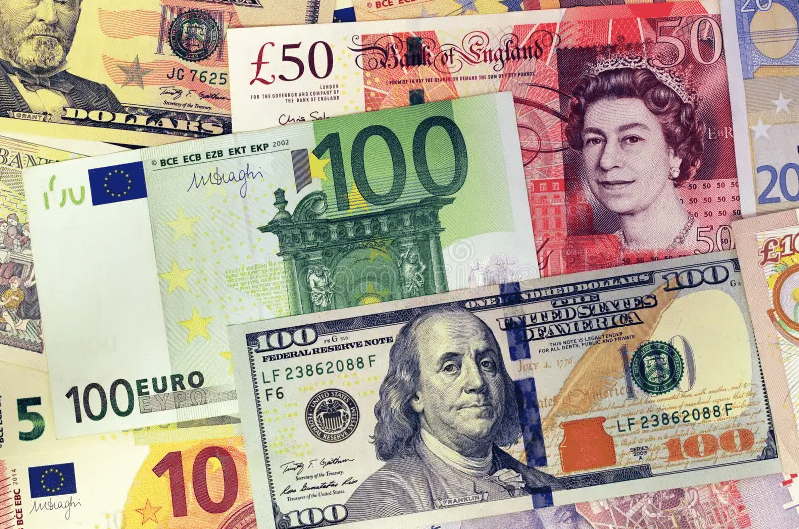
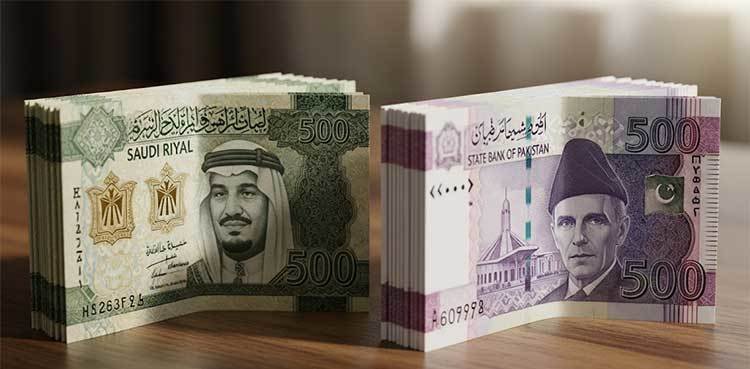
The Saudi Riyal (SAR) is trading at Rs74.68 per Pakistani Rupee (PKR) in the open market today, reflecting a slight strengthening of the Rupee compared to early January levels, when the rate reached Rs75.11 on January 8, 2026. Over the past six months, the SAR/PKR pair has generally fluctuated between Rs74.57 and Rs76.05, with the Riyal hitting a six-month high of Rs76.05 in September 2025 due to seasonal demand and rising oil prices, and a recent low of Rs74.57 in December. Compared with the sharp depreciation observed during 2022-2023, the pair has remained relatively stable, supported by remittances, trade flows, and a pegged exchange rate to the US Dollar.
The SAR/PKR exchange rate is influenced by several key factors. Saudi Arabia’s oil exports and fluctuations in global Brent crude prices affect the Riyal’s strength, while its fixed peg to the US Dollar at 3.75 SAR per USD ensures that SAR/PKR movements often mirror USD/PKR trends. Remittances from Pakistani workers in Saudi Arabia, which totaled $913.3 million in May 2025 and $34.9 billion cumulatively from July 2024 to May 2025, provide vital foreign currency inflows that help support the Rupee. Pakistan’s domestic inflation, interest rate differentials with the Saudi Central Bank, and import-export dynamics with Saudi Arabia also affect the Rupee’s valuation against the Riyal.
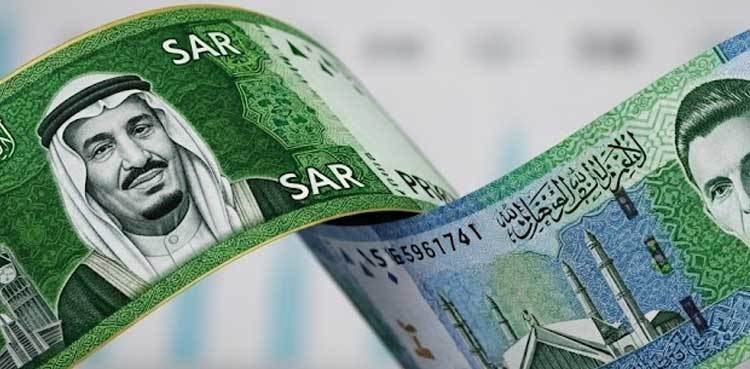
The Saudi Riyal has been the official currency of the Kingdom since 1932 and is issued by the Saudi Central Bank (SAMA). Subdivided into 100 halalas, it circulates in denominations of 5, 10, 50, 100, 200, and 500 Riyals, featuring advanced security features and portraits of Saudi monarchs and holy Islamic sites. Its stability is underpinned by the USD peg and Saudi sovereign wealth.
The Pakistani Rupee, managed by the State Bank of Pakistan since 1948, operates under a managed floating exchange rate. Divided into 100 paisa, the PKR is now issued in denominations of 10, 20, 50, 100, 500, 1,000, and 5,000 Rupees, featuring national landmarks and Muhammad Ali Jinnah’s portrait. The Rupee’s value reflects Pakistan’s economic fundamentals, including exports, agricultural output, and remittance inflows from Gulf countries.