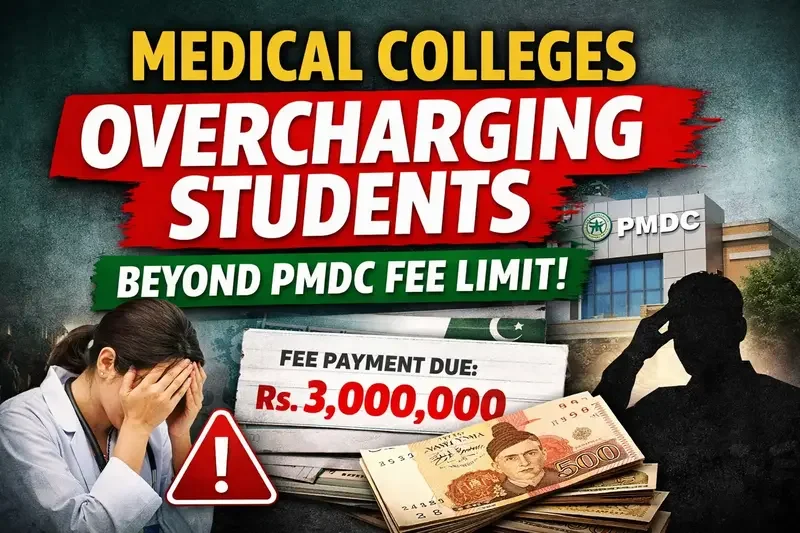
In 2026, many private medical and dental colleges in Pakistan are charging students fees well above the official PMDC limit, creating confusion and financial stress for parents. The Pakistan Medical and Dental Council has set the annual tuition fee for private institutions at Rs 1.89 million for the 2025–26 academic session, which includes all tuition and mandatory academic costs. Any additional charges are officially prohibited, but multiple reports indicate that colleges are demanding significantly higher amounts.
Parents across major cities including Islamabad, Lahore, Karachi, and Peshawar have reported receiving admission letters and bank challans requiring payments of Rs 2.5 million to Rs 3.5 million upfront, with additional “remaining college fees” and five-year charges ranging from Rs 800,000 to Rs 1 million. Extreme pressure tactics, such as demanding full payment within 24 hours or risking cancellation of seats, are causing panic among families, forcing them to pay illegally high amounts without official receipts or clear breakdowns.
Even after paying inflated upfront fees, students face hidden charges over five years, including examination fees, laboratory and clinical training costs, IT and learning management services, and convocation fees. These unregulated charges allow colleges to collect additional lakhs beyond the PMDC-approved fee.
The lack of enforcement by PMDC has compounded the problem. A temporary stay reportedly obtained by private medical college associations has stalled the fee cap, with the matter currently under review by a high-powered committee, reportedly headed by the Deputy Prime Minister. No timeline or temporary relief has been announced, leaving parents and students vulnerable.
Unchecked fee hikes threaten the medical education system in Pakistan. Talented students may be excluded due to cost, student debt may rise, and healthcare education risks becoming increasingly commercialized. Trust in regulators is declining, and access to medical education is shifting from merit-based opportunities to privilege for those who can afford excessive fees.
Parents and students are advised to demand written fee breakdowns, retain admission letters and challans, file complaints through the PMDC complaint portal, and approach consumer courts if necessary. Collective action through parent groups and advocacy on social media can help apply pressure, although immediate relief remains limited. Legally, charging above the PMDC limit is unlawful unless a final court judgment permits it. Temporary stays do not automatically make overcharging legal, and colleges exploiting this grey area are acting in violation of regulations.
The situation has sparked public debate about profiteering in private medical colleges, weak regulatory enforcement, and accountability of education authorities. Parents, activists, and students continue to demand transparency and strict action against violators.
Frequently asked questions include the official PMDC fee limit, legality of extra charges, reasons colleges cite for overcharging, steps parents should take, and current regulatory action. The PMDC annual tuition fee remains Rs 1.89 million, and charging above this without legal authorization is not permitted. Parents are advised to document all charges and follow official channels for complaints, while remaining vigilant about the financial demands imposed by institutions.
The issue of medical colleges charging above the PMDC fee limit in 2026 highlights a systemic failure affecting students, parents, and the future of healthcare education in Pakistan. Transparency, enforcement, and accountability remain critical to protecting merit-based access to medical studies.